How to Balance Seo Google Ads And Meta Ads For Sustainable Business
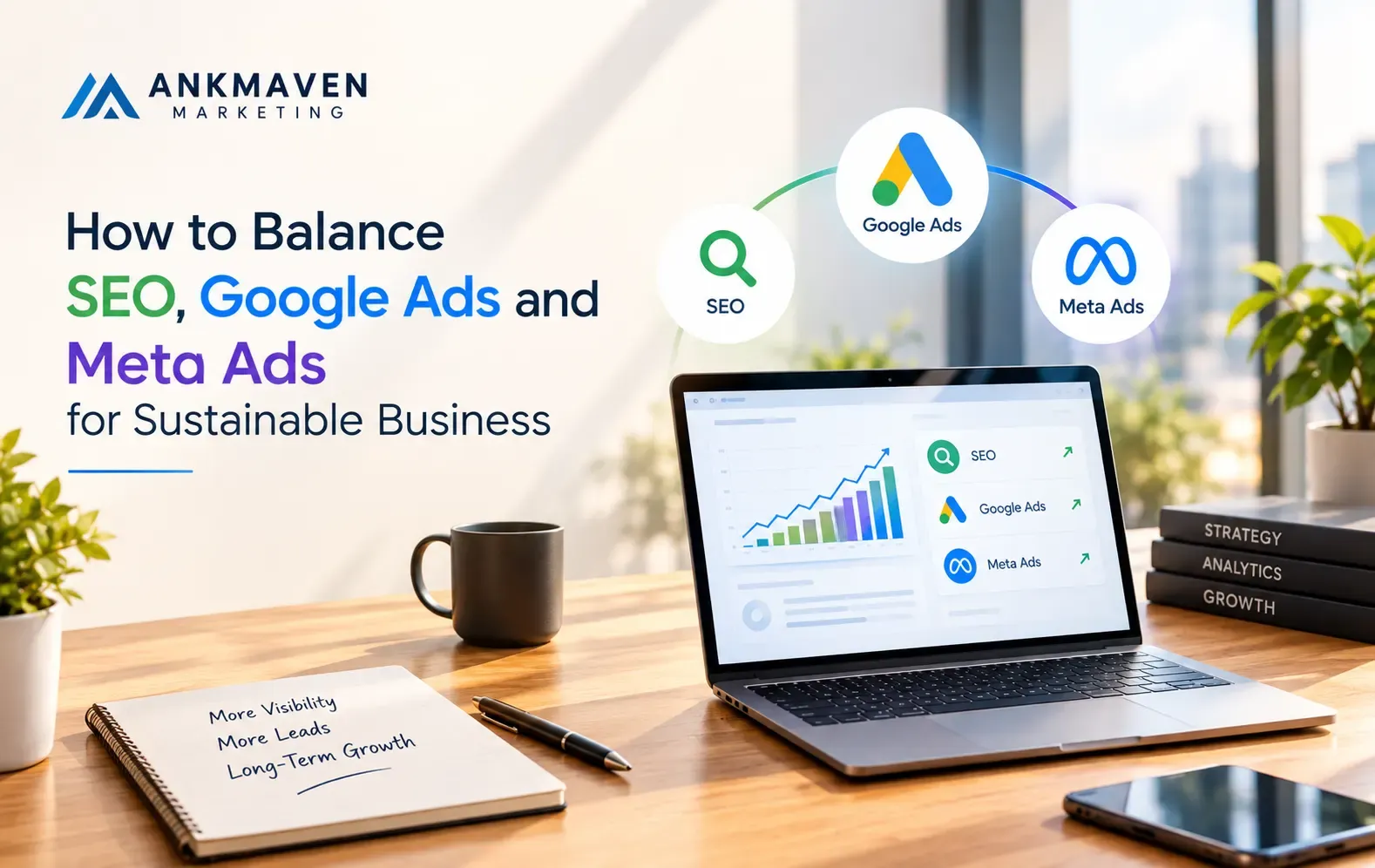
Building a sustainable online presence is not about choosing one digital marketing channel and ignoring the others. A business may need organic visibility, immediate traffic, brand awareness, and consistent lead generation at different stages of growth. This is where SEO, Google Ads, and Meta Ads can work together as parts of a single marketing system.
The challenge is finding the right balance. Investing heavily in paid campaigns without building organic visibility can make customer acquisition dependent on advertising spend. On the other hand, relying only on SEO may take time before a business receives meaningful traffic. A balanced strategy combines long-term visibility with targeted paid promotion while keeping business objectives at the centre.
Understanding the Role of Each Channel
Before deciding how much attention each channel deserves, it is important to understand what each one contributes.
SEO focuses on improving a website's visibility in organic search results. It can help a business attract people who are actively researching products, services, solutions, or local providers. Unlike paid traffic, organic visibility can continue generating visits after the initial optimisation work, although maintaining rankings requires ongoing effort.
Google Ads works differently. It provides an opportunity to appear in front of people who are already searching for relevant products or services. This makes search advertising useful when immediate visibility is required or when a business wants to target specific commercial queries.
Meta Ads, through platforms such as Facebook and Instagram, can reach audiences based on interests, behaviours, demographics, engagement, and other targeting signals. Instead of waiting for someone to search, businesses can introduce an offer or brand to potential customers while they are consuming social content.
The three channels therefore have different functions rather than being interchangeable options.
Build the Organic Foundation With SEO
For businesses competing in crowded local markets, SEO should be treated as an ongoing asset rather than a one-time campaign. A strong organic strategy begins with understanding what potential customers actually search for.
For example, a company targeting the Delhi NCR market may create service pages around relevant locations, develop useful informational content, improve internal linking, optimise technical elements, and maintain accurate business information. SEO Services in Delhi NCR can therefore involve much more than inserting a location name into articles.
Content quality is particularly important. A page should answer a genuine customer question, explain the subject clearly, and provide enough useful information for the visitor to take the next step. Creating multiple pages that say essentially the same thing with different keywords can make a website feel repetitive rather than comprehensive.
Local intent also deserves attention. Searchers may compare providers, investigate pricing, check services, or look for businesses in a particular area. Pages designed around these real search journeys can support both visibility and conversions.
Use Google Ads for Immediate Search Visibility
Organic rankings take time, whereas Google Ads can place a relevant offer in front of a searcher much sooner. This makes paid search useful when a business is launching a service, entering a competitive market, promoting a time-sensitive offer, or testing demand.
However, running campaigns is not simply a matter of selecting popular keywords and increasing the budget. Campaign structure, search intent, ad relevance, landing-page experience, conversion tracking, and negative keywords all influence performance.
For a local service provider, Google Ads Services in Noida may be structured around different service categories and search intentions rather than sending every visitor to the same generic homepage.
The landing page should continue the message introduced by the advertisement. If an ad promises a particular service, the destination page should explain that service clearly and make the next action obvious. This reduces unnecessary friction and helps businesses evaluate whether advertising traffic is producing meaningful enquiries rather than just clicks.
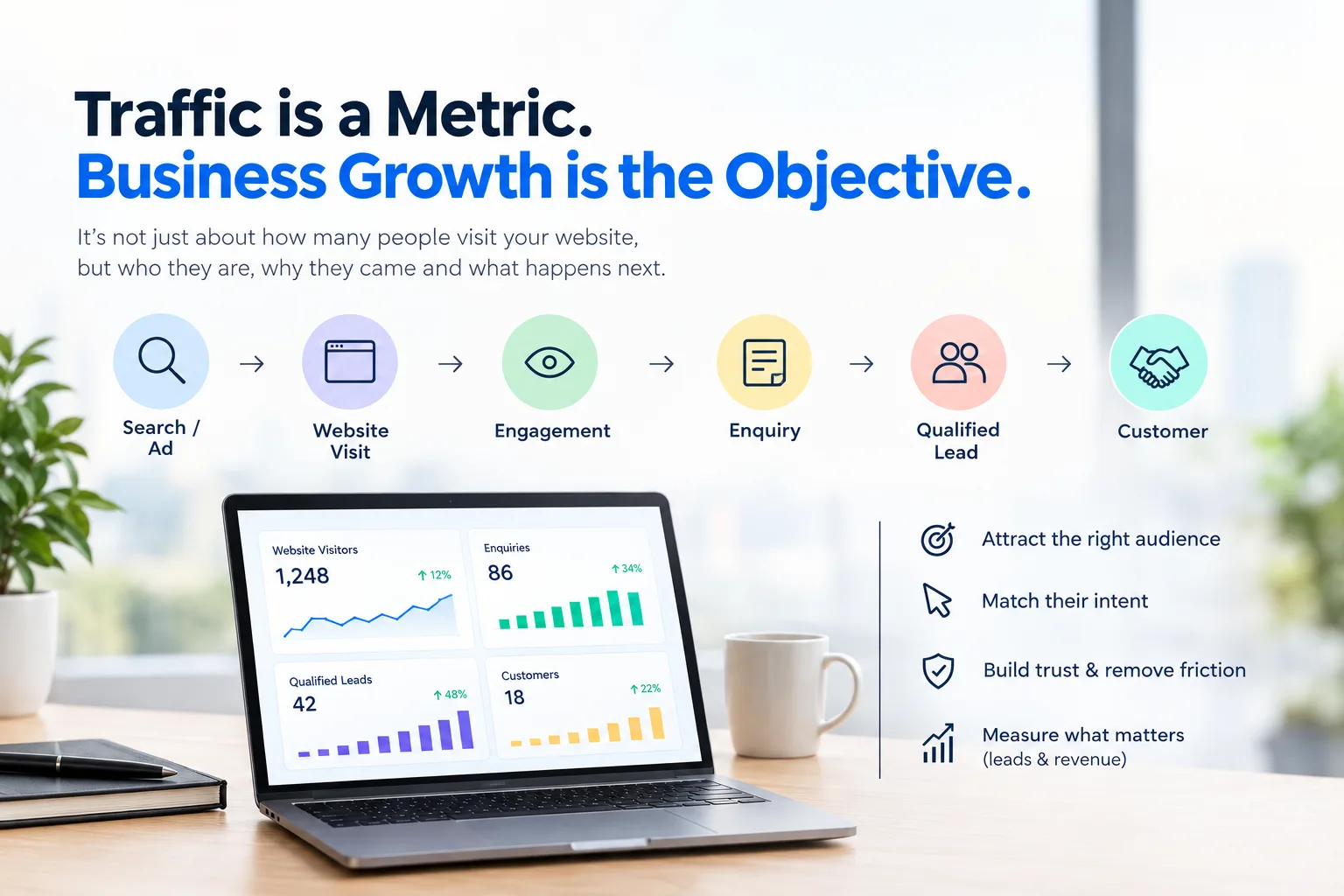
Another important principle is measurement. Cost per click alone does not reveal whether a campaign is helping the business. Qualified enquiries, booked appointments, sales, customer value, and repeat business provide more useful information for decision-making.
Use Meta Ads to Expand Reach and Build Demand
Meta Ads can complement search advertising by reaching audiences before they actively search for a solution. This makes the platform useful for awareness, product discovery, remarketing, offers, and visually engaging campaigns.
For businesses operating around Noida and nearby markets, Meta Ads Services in Noida can be structured around clearly defined audience groups and different stages of the customer journey.
Creative quality matters considerably. A social advertisement has only a short window to attract attention, so the opening message, visual presentation, offer, and call to action should work together. Different audiences may also respond to different messages. Someone who has never heard of a business may need an introductory message, while a previous website visitor may respond better to proof, an offer, or a specific service benefit.
Retargeting can connect paid social activity with website behaviour. Someone who visited a service page without making an enquiry can later receive a relevant reminder or educational message. This creates continuity instead of treating every advertising impression as an isolated interaction.
Create a Connected Customer Journey
The biggest opportunity comes when these channels are planned together.
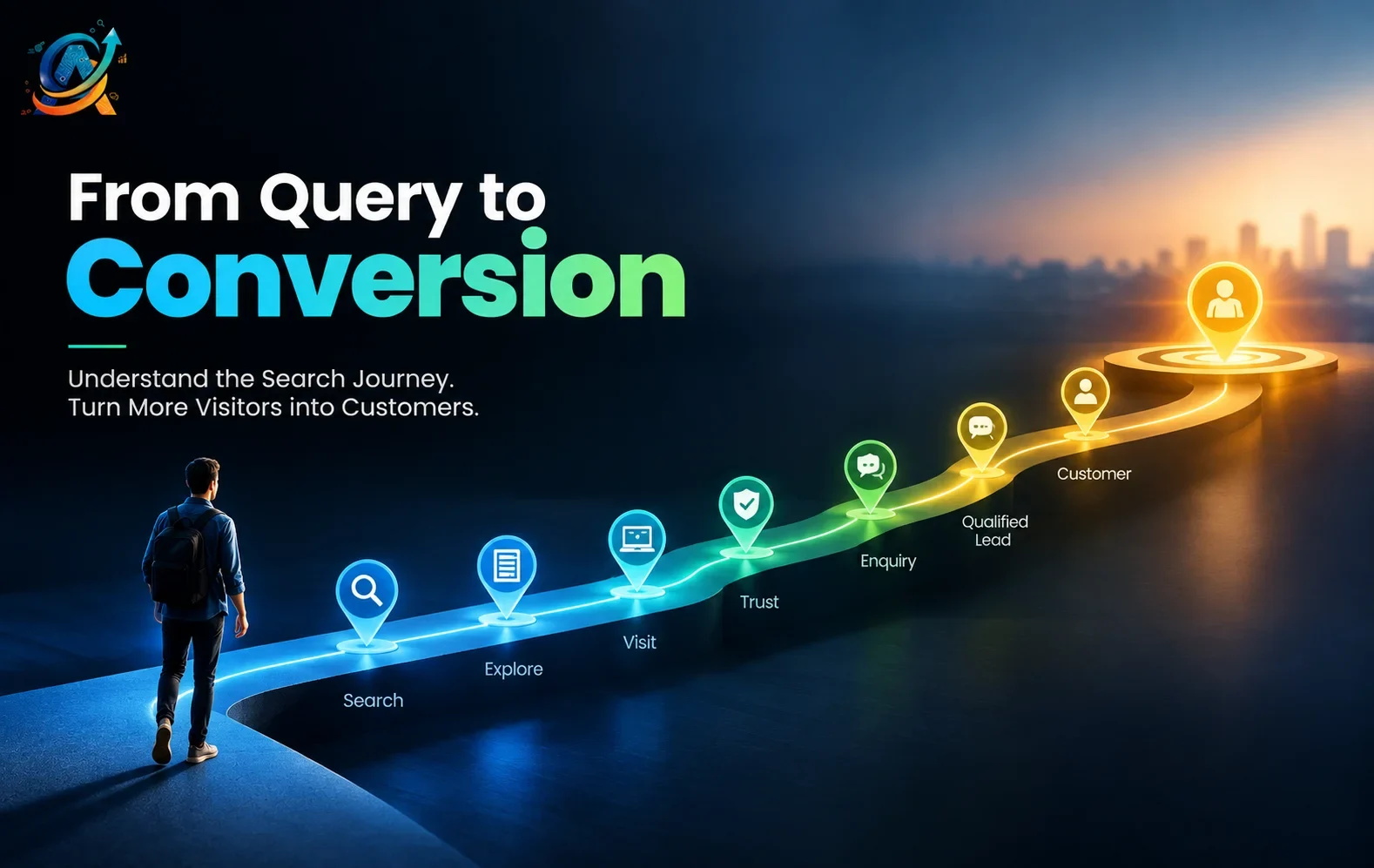
A potential customer might first discover a company through a social advertisement. Later, they may search the brand name on Google, visit the website through an organic result, compare services, and eventually submit an enquiry through a paid search campaign.
If every channel is measured separately, the business may misunderstand what actually contributed to the conversion. A more useful approach is to examine the complete customer journey.
SEO can build credibility and capture recurring search demand. Google Ads can respond to immediate commercial intent. Meta Ads can introduce the brand, generate interest, and bring previous visitors back into consideration.
This does not mean every business needs to invest equally in all three. The appropriate balance depends on factors such as search demand, sales cycle, competition, budget, customer behaviour, and the maturity of the business.
Balance Budget Around Business Objectives
A fixed percentage split should not be treated as a universal formula. Instead, businesses should determine which stage of the customer journey needs additional support.
If organic traffic is weak, improving website structure and content may be more valuable than continually increasing advertising expenditure. If a business already receives strong organic traffic but needs more enquiries quickly, Google Ads may provide additional reach. If awareness is limited and the offer benefits from visual storytelling, Meta campaigns may help create initial interest.
Budget decisions should therefore follow measurable business outcomes.
A useful review can include:
Organic traffic and relevant search visibility
Qualified leads from paid campaigns
Conversion rate of landing pages
Cost per qualified enquiry
Sales generated from each channel
Returning visitors and remarketing performance
Customer acquisition cost
Revenue and customer lifetime value
Looking at these numbers together prevents a business from celebrating inexpensive clicks that do not produce customers.
Avoid Channel-Specific Thinking
One common mistake is treating SEO, Google Ads, and Meta Ads as competing departments. They are better understood as connected components of the same acquisition strategy.
SEO can provide sustainable visibility. Search advertising can capture active demand. Social advertising can support awareness and remarketing. Insights from one channel can also improve another. Search-query data may reveal topics worth developing through content, while Meta engagement can indicate which messages deserve further testing.
This feedback loop can make the overall marketing system more efficient over time.
Focus on Sustainable Growth, Not Temporary Traffic
Sustainable digital marketing is ultimately about building an acquisition system that can continue working as the business grows. That requires more than traffic numbers.
A successful strategy connects useful content, relevant advertising, strong landing pages, accurate tracking, responsive sales processes, and consistent customer communication.
Businesses should also review their strategy regularly rather than assuming that one channel will perform identically throughout the year. Search behaviour changes, competition evolves, advertising costs fluctuate, and customer expectations develop.
The goal is not to make SEO, Google Ads, or Meta Ads individually responsible for growth. The goal is to give each channel a clear role and measure how those roles contribute to the wider business objective.
When organic visibility, paid search, and social advertising support one another, marketing becomes less dependent on a single source of traffic. That balanced approach can help businesses build stronger visibility today while creating a more resilient customer acquisition system for the future.